Altitude Effects on Scoring Patterns in Andean Football Leagues for Targeted Accumulator Construction
Written by Hugo Schmitz · Jun 20, 2026
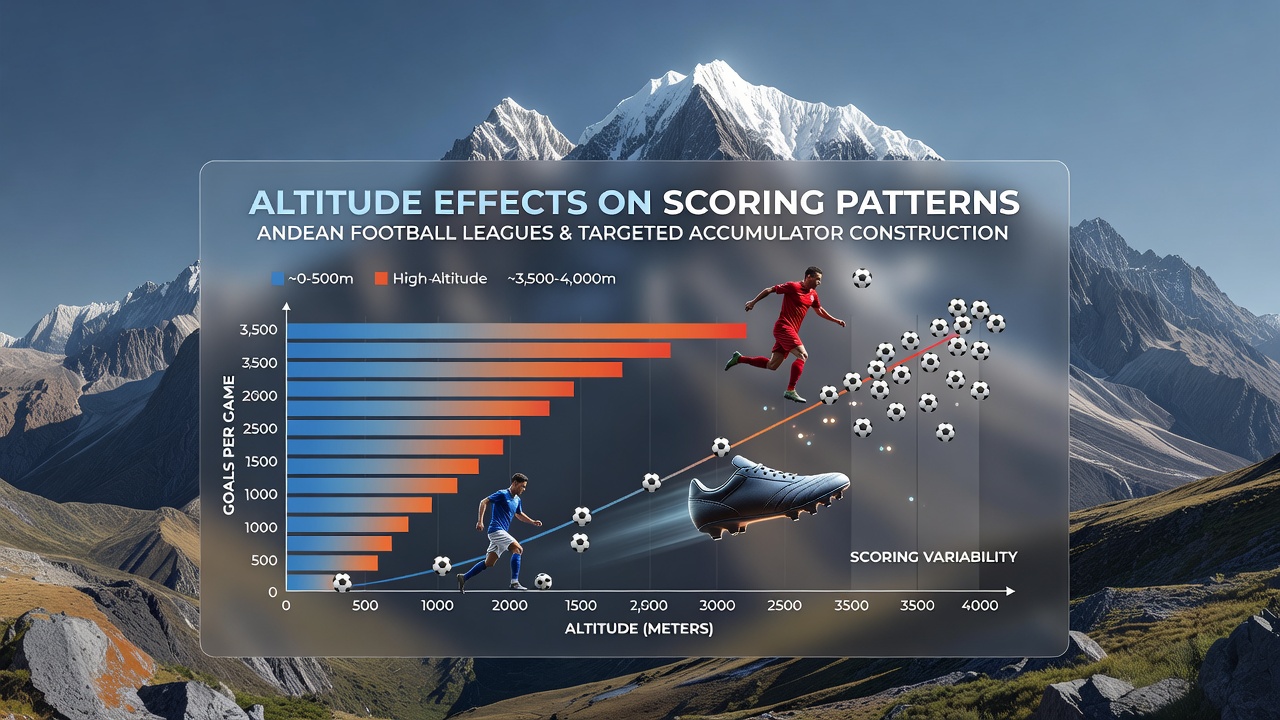
Altitude Effects on Scoring Patterns in Andean Football Leagues for Targeted Accumulator Construction
Football matches played at extreme elevations across the Andean region create distinct scoring patterns that stand out when compared to sea-level fixtures, and analysts track these trends closely for accumulator planning. Cities such as La Paz, Quito, and Cusco sit above 2,800 meters, where reduced oxygen availability alters player output in measurable ways. Teams accustomed to these conditions often maintain higher work rates while visiting sides experience quicker fatigue, which shifts goal tallies toward the home side in the majority of encounters.
Physiological Responses at Elevation
Lower air density reduces oxygen uptake and forces athletes to adjust breathing patterns within the first ten minutes of play. Studies conducted by exercise physiologists show that repeated sprints become shorter and recovery intervals lengthen, especially for players arriving from lowland clubs. Heart rates climb faster during transitions, and decision-making accuracy dips after the sixtieth minute when cumulative fatigue sets in. These effects appear most pronounced in the second half, where data from Bolivian adn Ecuadorian fixtures reveal a measurable drop in shots on target from visiting teams.
Scoring Trends Across Major Leagues
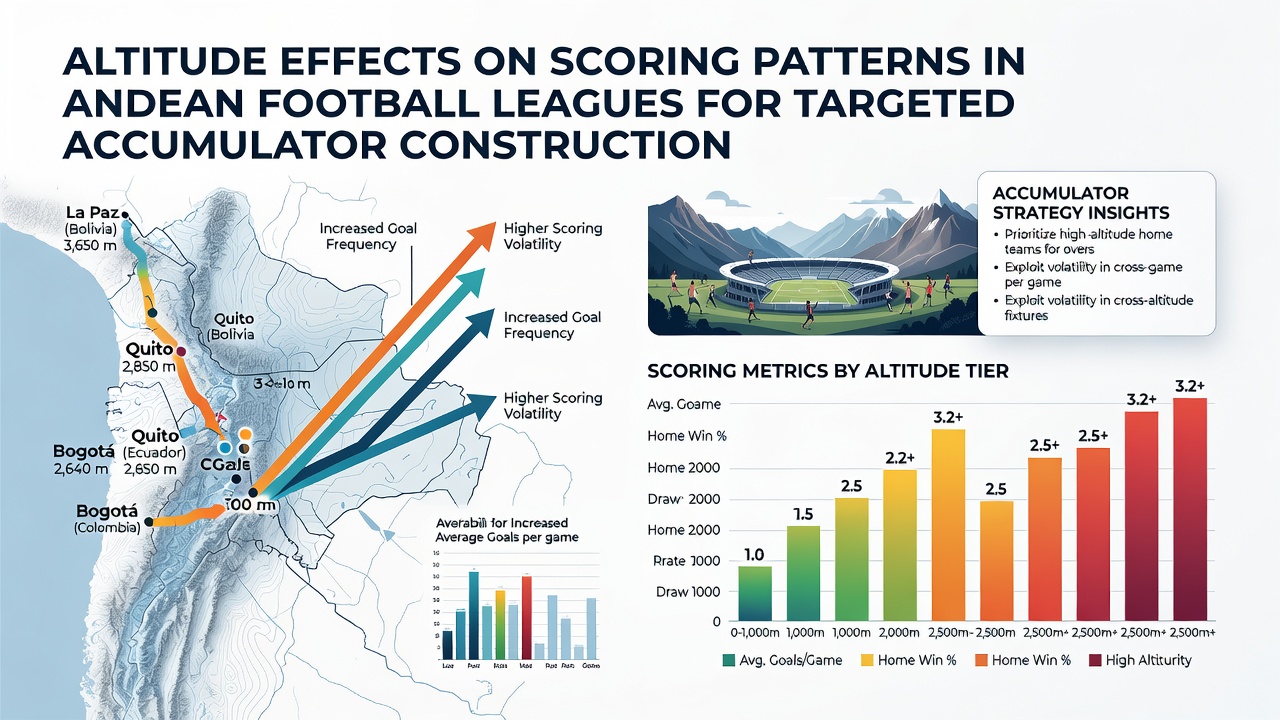
Records from the Bolivian Primera División indicate that matches hosted above 3,500 meters produce an average of 3.1 goals per game, compared with 2.4 goals in fixtures played below 1,000 meters. Similar patterns emerge in Ecuador’s Serie A, where Quito-based clubs record a higher proportion of home victories when facing coastal opponents. Peruvian Liga 1 statistics collected between 2022 and 2025 show that away sides at highland venues convert fewer than 28 percent of their expected goals, a figure that drops further during the June schedule when mid-season travel demands intensify ahead of international breaks.
Implications for Accumulator Construction
Bet constructors incorporate these location-specific metrics when selecting legs that involve home teams at altitude. Over-2.5-goal markets have historically shown elevated hit rates in La Paz and Potosí during the opening months of each campaign, while under-2.5 selections gain traction once visiting squads complete a full week of acclimatization. League tables compiled by CONMEBOL-affiliated statisticians further separate results by elevation band, allowing targeted combinations that pair highland home wins with low-scoring encounters at sea level. Observers note that June 2026 fixtures follow the same distribution, with mid-year scheduling placing several double-header weekends at elevation just before Copa América preparations begin.
Case Examples from Recent Seasons
One documented sequence in the 2024 Bolivian Clausura saw The Strongest post eight home matches above 3,600 meters with an average of 3.4 goals, while the same team averaged 2.1 goals in away games near the coast. Researchers tracking expected-goal differentials across Colombian and Peruvian clubs have published comparable splits, confirming that the gap widens when travel exceeds 1,500 kilometers. These patterns repeat across multiple campaigns without requiring subjective interpretation, simply reflecting consistent environmental variables.
Integration with Broader South American Data Sets
Academic teams from the University of Sydney have cross-referenced GPS and heart-rate data from Andean clubs with performance logs supplied by participating federations, producing elevation-adjusted models that refine goal projections for specific venues. The resulting figures feed directly into multi-leg structures where one or two highland matches anchor an accumulator while complementary legs draw from lower-altitude leagues that exhibit steadier scoring averages. Because the physiological constraints remain constant, these models retain predictive value across seasons when updated with fresh travel and acclimatization records.
Conclusion
Altitude continues to shape goal distributions in Andean football through measurable physiological and logistical factors. League statistics, physiological research, and venue-specific records supply the factual basis for constructing accumulators that align with observed scoring tendencies at elevation. Ongoing collection of match data through 2026 ensures these patterns stay current for anyone assembling targeted selections across the region’s top divisions.