Deciphering Referee Tendencies Across Bundesliga Fixtures for Card Market Positioning
Written by Hugo Schmitz · Aug 20, 2026
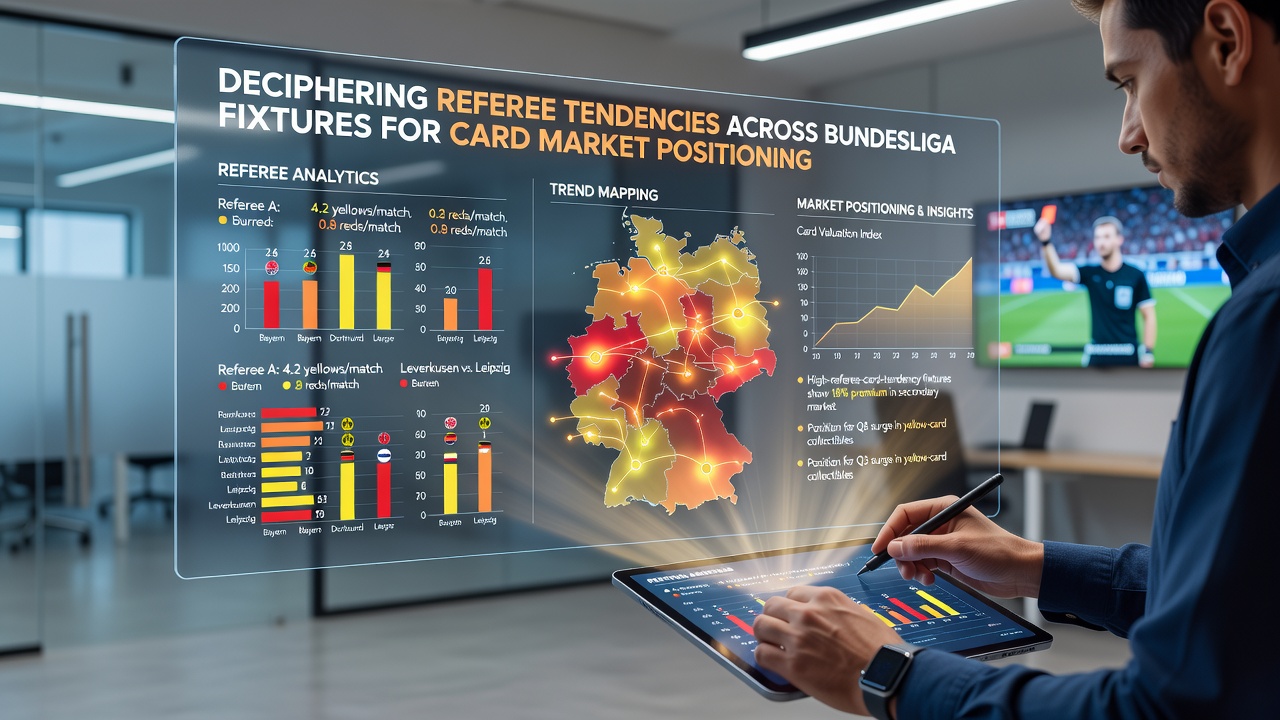
Deciphering Referee Tendencies Across Bundesliga Fixtures for Card Market Positioning
Referee patterns in the Bundesliga shape card market outcomes through consistent statistical profiles that data analysts track across multiple seasons, and observers note how individual officials maintain distinct averages for yellow cards, red cards, and fouls called per ninety minutes. Those who study these fixtures compile referee reports from official match logs, and such records reveal variations that range from lenient officials averaging under four cards per game to stricter arbiters exceeding six, while home and away differentials add another layer since many referees issue more cautions to visiting sides in the opening thirty minutes. Researchers at institutions like the University of Leipzig have examined these distributions through longitudinal datasets, and their findings indicate that factors including team pressing intensity, derby contexts, and weather conditions influence card frequency without altering core referee baselines.
Core Data Sources and Tracking Methods
Analysts gather information from the Deutsche Fußball-Bund, whose match reports provide raw tallies broken down by official, fixture type, and time segment, and these figures allow positioning in card markets by identifying referees whose historical output aligns with over or under lines set by bookmakers. Bundesliga fixtures scheduled for August 2026 will follow the same data protocols established in prior campaigns, yet updates to disciplinary guidelines from the DFB could shift thresholds slightly for reckless challenges in the penalty area. External verification comes through cross-referencing with European football databases maintained by UEFA, which publish aggregated referee metrics across member leagues, and such sources confirm that Bundesliga officials rank among the higher card issuers in top-five European competitions due to the league's emphasis on high-tempo transitions.
Seasonal trends show that early August matches often feature elevated card counts because squads test physical boundaries after pre-season, and this pattern holds across multiple campaigns where referees enforce rules more visibly in the first three matchweeks. Those compiling multi-season spreadsheets highlight officials who consistently penalize simulation attempts or persistent dissent, thereby creating reliable edges when lines sit below historical averages for that referee.
Referee-Specific Profiles in Recent Campaigns
Individual referee records demonstrate clear clusters, with some officials issuing more cards in fixtures involving teams that employ aggressive high lines, while others focus sanctions on midfield duels that disrupt flow. Data compiled through the 2025-2026 season illustrates how certain referees maintain lower card rates when assigned to matches between mid-table sides, whereas top-of-table clashes produce spikes tied to increased challenges rather than referee variance alone. Observers tracking these patterns use time-stamped event data to isolate periods where card probability rises, particularly between minutes sixty and seventy-five when fatigue influences decision-making on both sides.
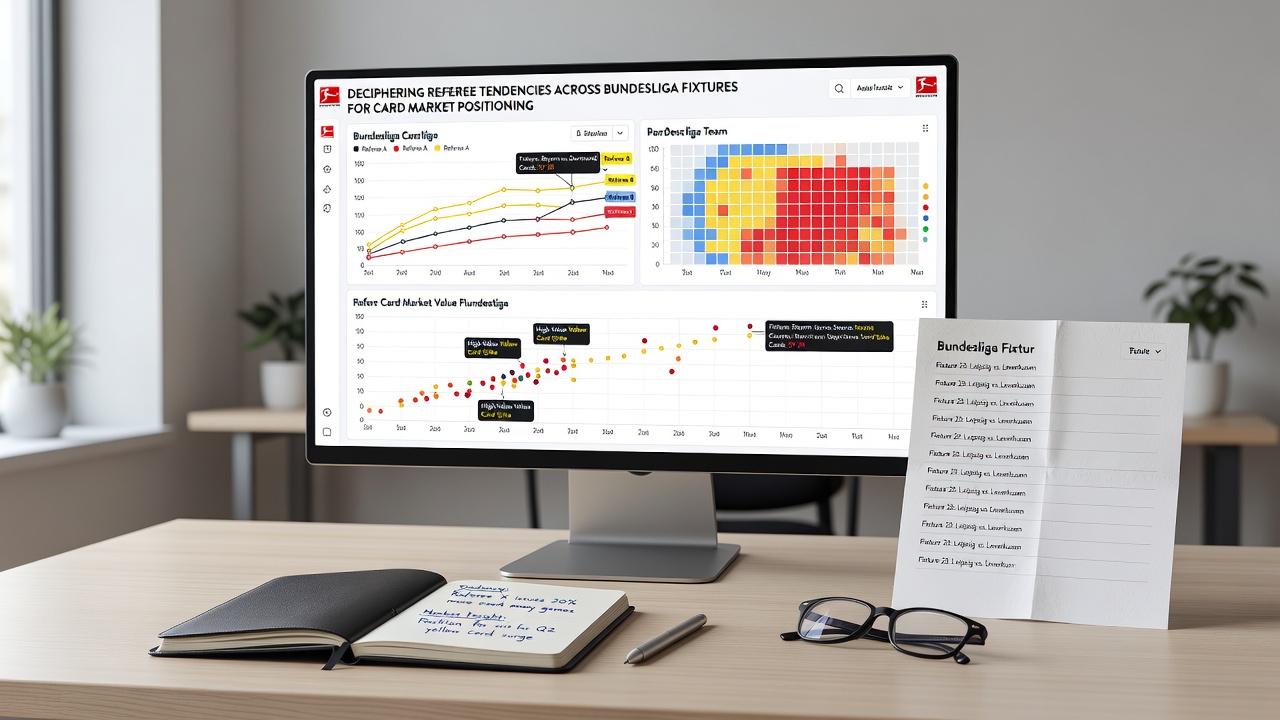
Positioning strategies rely on comparing a referee's current-season average against league-wide benchmarks, and figures from the DFB reveal that away teams receive approximately fifty-five percent of total cards across the campaign. This split remains stable even as individual referee styles vary, allowing market participants to adjust stakes when a known stricter official handles a fixture featuring two attacking sides prone to counter-pressing. Academic reviews of Bundesliga data further separate variables such as player substitutions and added time, which correlate with additional cautions when matches remain close.
Market Implications and Fixture Context
Card market positioning benefits from layering referee history with team-specific foul rates, and studies from German sports analytics groups demonstrate that clubs averaging over twelve fouls per game amplify card totals when paired with officials above the median card count. August 2026 fixtures will introduce new promoted sides whose physical approach may interact differently with established referee tendencies, creating fresh data points for ongoing analysis. External reports from sports research bodies in Australia have compared similar referee patterns across leagues, confirming that consistent tracking of card timing improves predictive accuracy beyond simple per-game averages.
Fixture congestion around international breaks also affects outcomes, since squads field rotated lineups that sometimes lack the coordination to avoid late challenges, and referees respond by maintaining their established sanction rates. Those monitoring multiple seasons observe that red card frequency stays low overall yet clusters around specific officials who apply stricter criteria for last-man denials. Integration of these elements produces positioning frameworks that account for venue, kickoff time, and historical head-to-head card totals without relying on single-match anomalies.
Conclusion
Comprehensive referee analysis across Bundesliga fixtures supplies measurable inputs for card market positioning through sustained data collection and cross-verification with official league and European governing bodies. Patterns identified in seasons leading into August 2026 continue to inform adjustments based on individual official profiles, time segments, and team tendencies, while external academic and regional sports research adds comparative context that strengthens statistical models. Continued aggregation of match logs remains central to maintaining accuracy as league dynamics evolve.