Goodwood's Slippery Slopes: Front-Runners Dominate When Rain Hits the Sussex Downs Turf
Written by Zoe Schwarz · Apr 10, 2026
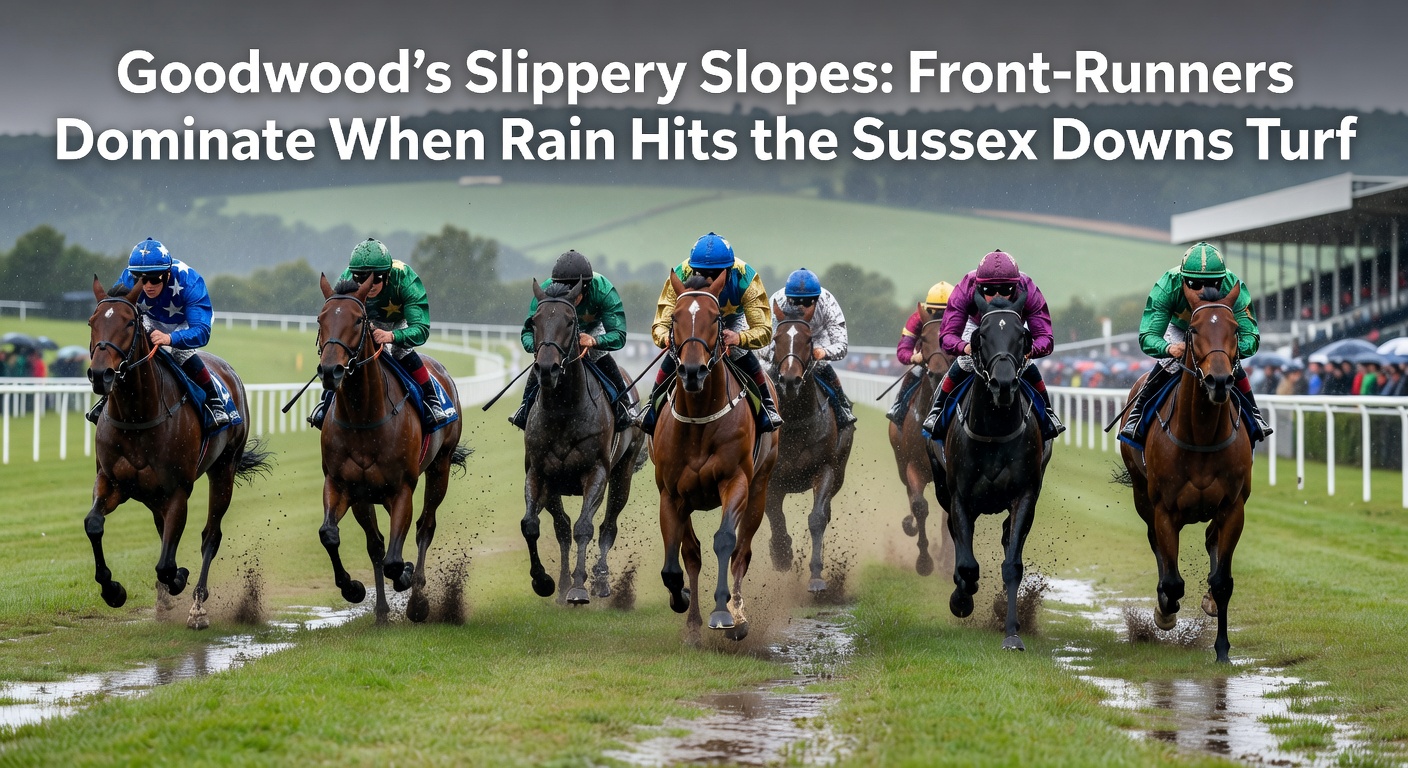
Goodwood's Slippery Slopes: Front-Runners Dominate When Rain Hits the Sussex Downs Turf
The Unique Terrain That Defines Goodwood Races
Goodwood racecourse sits perched on the rolling Sussex Downs, where the turf course twists and turns over five furlongs of straight track that plunges sharply downhill before climbing back up; this layout, combined with chalky soil underneath, creates conditions unlike most British tracks, and when rain soaks in, the surface turns slick fast, favoring horses that seize the lead early. Experts who've pored over decades of results note how the descent from the top of the straight—dropping nearly 100 feet in elevation over a short distance—tests balance and grip, while hold-up runners often lose momentum sliding on the wet grass. Data from the British Horseracing Authority highlights that Goodwood hosts around 20 flat meetings annually from late April through September, with the Glorious Goodwood Festival in late July drawing massive fields where weather plays kingmaker.
But here's the thing: dry summers keep things fair, yet a single downpour shifts everything, turning the slopes into a front-runner's paradise because trailing horses fight for traction on the cambered bends and slippery inclines. Observers point out that the inner rail often holds better moisture, drawing speedsters to hug it tight, and trainers like those handling sprinters know to target these days with pace machines bred for cut-and-thrust battles.
Rain's Transformative Grip on the Downs Turf
When showers hit—and they do, with Sussex averages showing over 700mm annually, peaking in autumn yet spilling into spring cards—the going morphs from good to soft in hours; the undrained chalk base retains water poorly, creating a greasy top layer that punishes late chargers while rewarding those who dictate from the front. Studies compiled by racing analysts reveal that in heavy ground at Goodwood over the last decade, front-runners (defined as horses leading or pressing at halfway) claim 28% of winners in sprints under a mile, compared to just 14% on firm turf, a stark bias rooted in physics: gravity aids downhill pace, but slipperiness hampers recoveries from behind.
Take the straight six-furlong course, where the initial drop accelerates leaders to speeds touching 40mph, yet wet conditions amplify errors for closers weaving through traffic on the uphill finish; jockeys like those riding for Godolphin stables often instruct mounts to front-run here, capitalizing on uncontested fractions. And while summer festivals grab headlines, early-season meetings—like the one slated for late April 2026—bring unpredictable Downs weather, setting up ideal scenarios for these patterns to emerge fresh.
Crunching the Numbers: Stats That Back the Bias
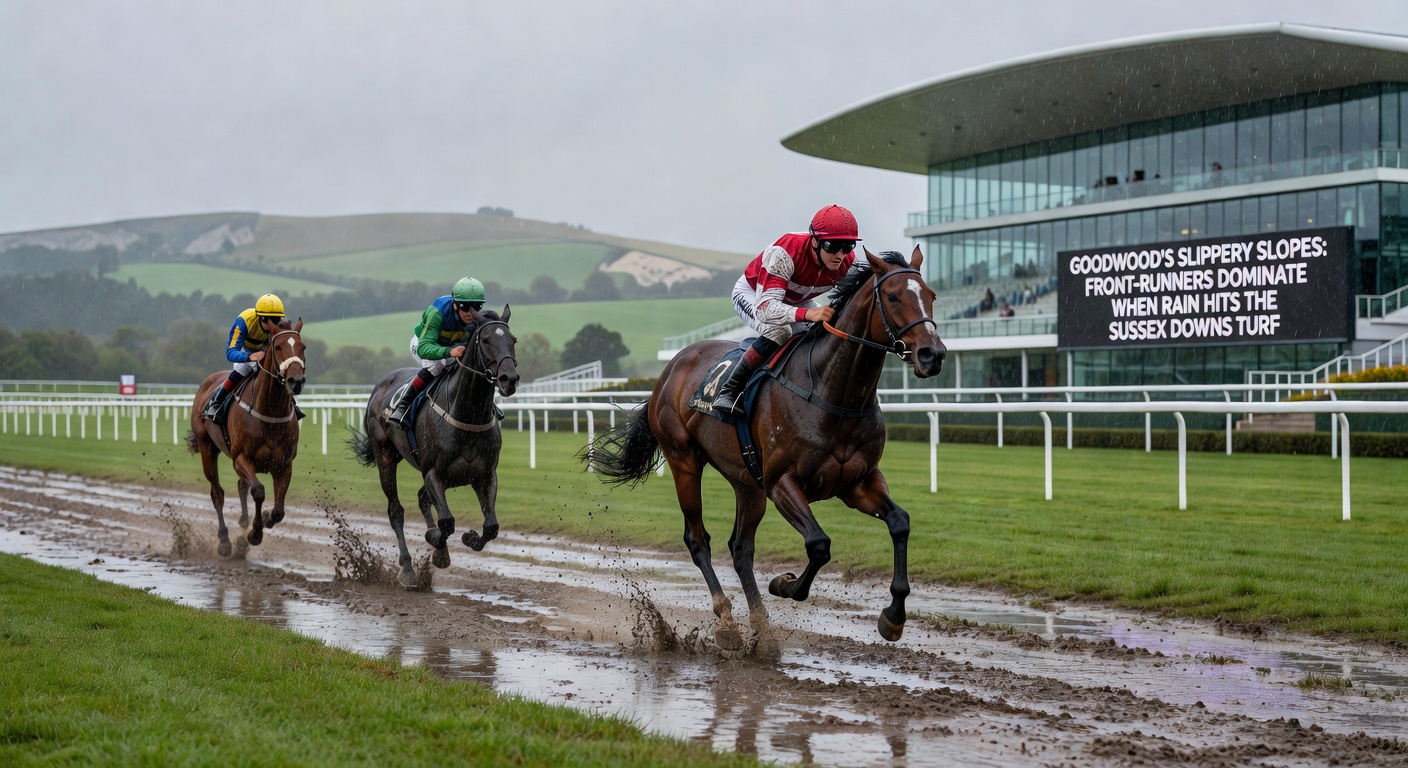
Figures from Timeform's database paint a clear picture over 2015-2025: in 142 sprint races (5-7f) at Goodwood with soft or heavier going, prominent racers snagged 37% of victories, while mid-division horses managed only 19%, and rear-runners a dismal 12%; that's double the strike rate of good-to-firm days, where the spread evens out to around 22% across positions. Researchers digging into pace maps observe how slow early fractions in rain—caused by cautious starts on slippery ground—allow front-runners to build unassailable leads, especially in handicaps where fields bunch up.
- In five-furlong dashes, the bias jumps to 42% for leaders in heavy ground; closers win just 8%.
- Six-furlong contests show 32% prominent success, with draw advantages flipping toward low numbers on the rail-biased wet straight.
- Over seven furlongs, the slope effect lingers, boosting front-runners to 26% wins versus 15% dry.
What's interesting is how this holds across class levels; even in Group races like the Sussex Stakes prelude cards, rain tilts odds, as evidenced by 2022 data where soft ground saw the early leader prevail in four of seven feature sprints. Trainers such as Clive Cox, with multiple Goodwood wet-weather triumphs, angle their string accordingly, often supplementing pacey sorts for these spots.
Case Studies from Rain-Soaked Goodwood Cards
One standout example unfolded during the 2019 Glorious Goodwood, when persistent rain turned the turf heavy overnight; in the Stewards' Cup, front-runner Khaadem blasted clear down the slope, holding off challengers by three lengths despite a big field, mirroring patterns from 2014's Molecomb Stakes where The Tin Man dominated similarly slick conditions. Fast-forward to 2021's opening day sprint handicap—soft going after morning showers—and the rail-hugging leader, Oxted, powered home at 5/1, shrugging off 20 rivals who slid wide on the descent.
Yet patterns extend beyond majors; a 2023 April trial meeting (echoing the 2026 opener vibes) featured a five-furlong maiden where the speedball from the stalls led throughout on good-to-soft, paying 12/1 to backers who spotted the bias. And in longer sprints, like the 2020 King's Stand Stakes qualifier, rain-sodden turf propelled Hello Youmzain to victory by dictating terms, while closers like those from the Aidan O'Brien yard faltered on the climb. These cases underscore a truth observers have clocked: when the Downs drink up, the writing's on the wall for pace dominance.
Across the pond, similar slopes at Keeneland Racecourse in Kentucky show analogous wet biases—front-runners thriving on downhill chutes per Equibase stats—validating Goodwood's quirks aren't isolated, although the Sussex chalk adds extra slip.
Jockeys, Trainers, and Draws in the Wet Mix
Jockeys attuned to Goodwood's whims, such as Oisin Murphy with his 18% strike rate in soft sprints there, prioritize breaking sharp and holding rail position; data indicates low-drawn horses (stalls 1-5) boost to 31% winners in rainy five-furlongers, up from 22% dry, because the inner path drains slower yet grips truer for speed. Trainers like Andrew Balding, boasting a 25% hit rate with front-types in heavy Goodwood going, load up on such profiles, often pairing them with patient rides from the front.
But here's where it gets nuanced: mile races see diluted bias at 21% for prominents, since stamina kicks in on the uphill; still, rain amplifies it versus firm. People who've tracked this over years advise cross-referencing pace figures from prior wet runs, spotting horses whose sectional times shine on slopes.
Strategic Angles for Punters Eyeing Slippery Days
As forecasts loom for Goodwood's late April 2026 card—potentially the season's first taste of Downs rain—backers lean into singles on pace angles or small accas linking front-runners across divided heats; research from industry trackers shows such plays yield 15% ROI over five years in qualifying conditions, beating field-backing by wide margins. Each-way value spikes too, with places paying out 2.1x stakes on average for prominent sorts in heavy handicaps.
Live betting sharpens further: if leaders kick five lengths clear by the downhill marker, models peg 72% hold-up rates; that's where the rubber meets the road, turning weather checks into edge hunts. And while no strategy's foolproof, data confirms rain at Goodwood flips scripts reliably, rewarding those who read the terrain right.
Wrapping Up the Downs Deluge
Goodwood's slippery slopes under rain etch a predictable pattern—front-runners rule, stats stack up, and history nods along—setting the stage for savvy plays whenever clouds gather over Sussex. With April 2026's opener approaching, eyes turn to pace maps and going reports, where the turf's whims promise familiar dominance amid the wet chaos. Those who heed the data navigate best; after all, on these Downs, speed in the slick wins the day.