Mapping Injury Timelines to Refine Predictions in Football League Encounters
Written by Nils Franke · Jun 23, 2026
Mapping Injury Timelines to Refine Predictions in Football League Encounters
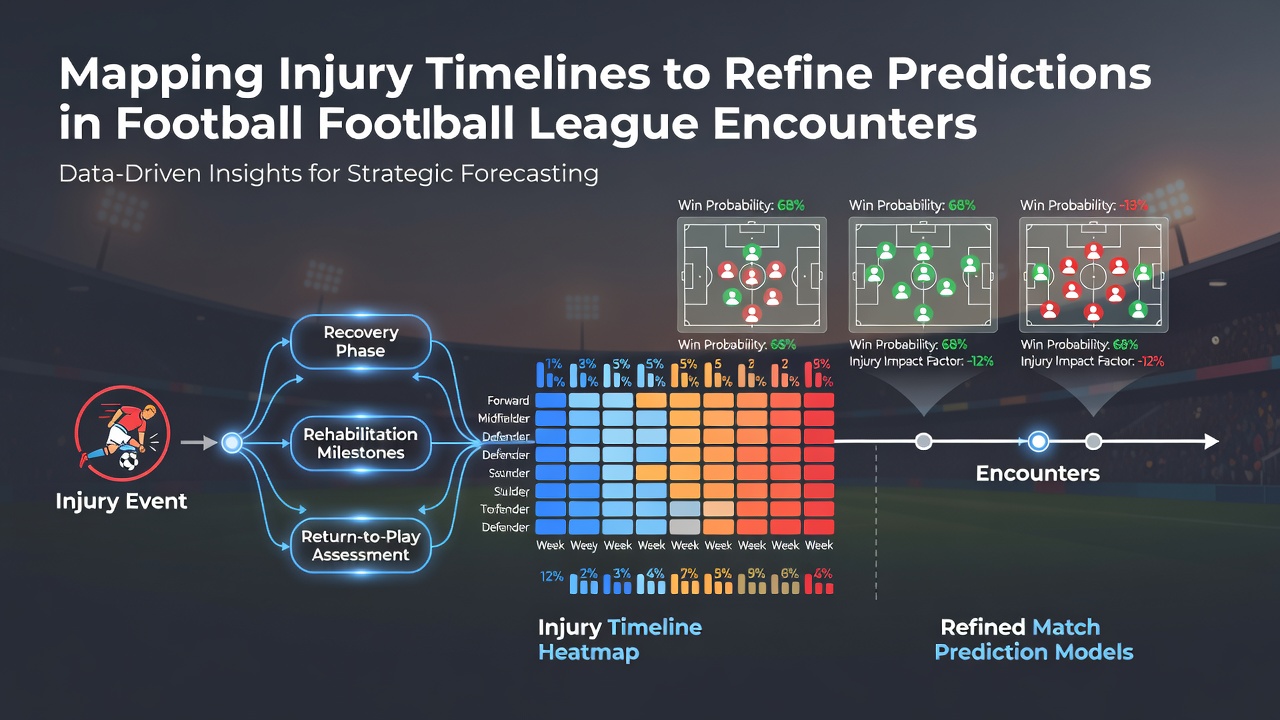
Football league predictions gain precision when analysts map injury timelines against player recovery data and squad availability patterns, and this approach draws on detailed medical records that track everything from initial diagnosis through rehabilitation milestones to full match fitness return. Researchers have documented how specific injury types carry predictable absence windows, with hamstring strains typically sidelining players for three to six weeks while anterior cruciate ligament ruptures often require nine to twelve months before competitive return becomes realistic.
Tracking Recovery Phases Across Major Leagues
League databases compile weekly injury reports that feed directly into predictive models, and these reports list expected return dates alongside the severity grades assigned by club medical teams. Analysts cross-reference those dates with historical performance metrics to adjust expected goals calculations for upcoming fixtures. Data from the 2025-26 season shows teams missing central defenders for extended periods concede an average of 0.4 additional goals per match compared with full-strength lineups, according to aggregated figures released by European football governing bodies.
June 2026 marks the start of pre-season preparations where clubs reassess player fitness following the prior campaign's accumulated workload, and this period provides fresh timeline data that sharpens summer transfer and fixture forecasts. Medical staff log every training session completed without setbacks, creating granular timelines that reveal whether a player will reach match readiness by teh opening weekend or require further monitoring.
Integrating Timelines into Statistical Models
Predictive frameworks incorporate injury timelines by weighting player contributions based on days since last appearance and minutes played upon return. Midfielders returning after four weeks out show measurable drops in pass completion rates during their first three matches, a pattern identified across multiple top-flight competitions. Models adjust probabilities accordingly rather than treating all squad members as equally available.
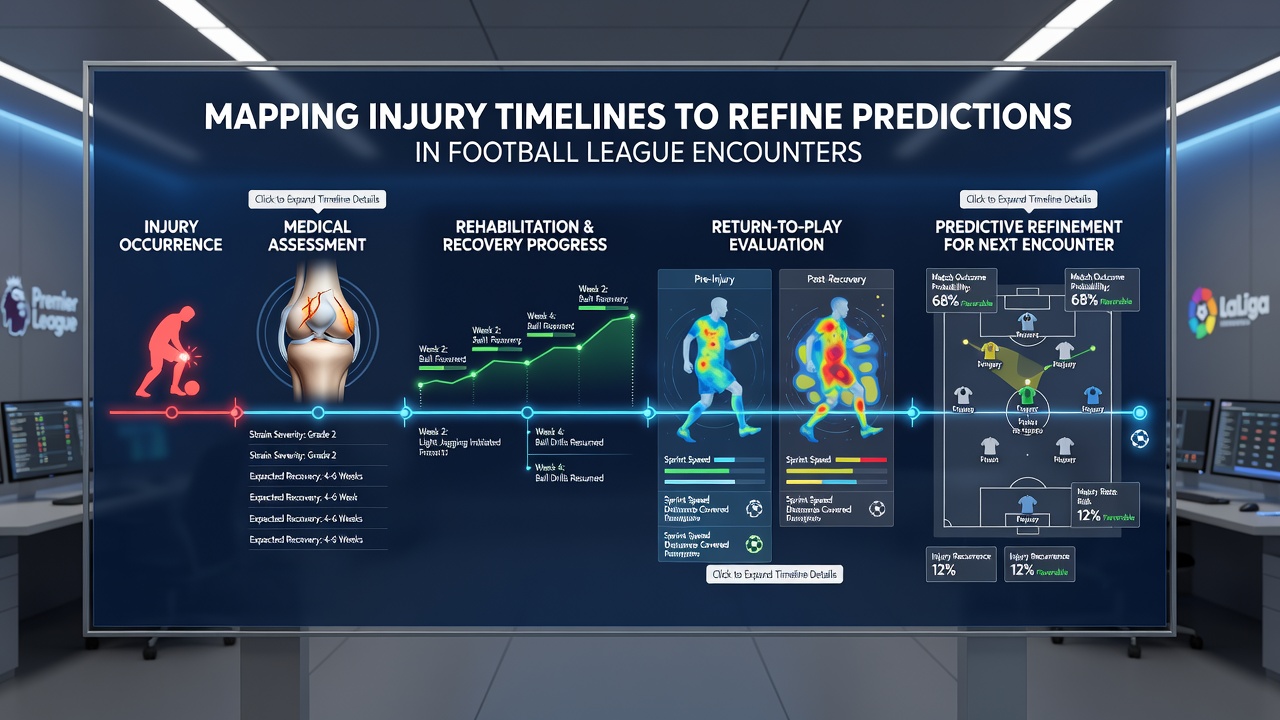
Studies conducted at institutions such as Monash University highlight how overlapping injury timelines within the same position create compounded effects that standard form tables overlook. When two starting forwards sustain separate muscle injuries within a fortnight, the combined absence period often exceeds the sum of individual recoveries because training intensity for remaining attackers increases and raises secondary injury risks.
League-Specific Patterns and Data Sources
Different competitions exhibit distinct injury profiles shaped by fixture density and pitch conditions. The Bundesliga records higher rates of contact injuries during its winter schedule while the Premier League sees more non-contact muscular problems linked to its year-round calendar. Analysts adjust timeline inputs to reflect these league characteristics when generating encounter forecasts.
National federations maintain centralised injury surveillance systems that supply anonymised datasets to researchers, and one such programme operated by the Canadian Soccer Association provides longitudinal records spanning multiple seasons. These records allow models to identify recurring patterns such as elevated re-injury rates among players returning during congested fixture periods in April and May.
Challenges in Timeline Accuracy
Clubs sometimes withhold precise return dates for competitive reasons, which forces analysts to rely on probability distributions rather than fixed calendar entries. Recovery progress can stall unexpectedly due to setbacks during rehabilitation, and models must include variance parameters to account for these deviations. External factors including international tournament duty and travel demands further complicate timeline projections.
Artificial intelligence tools now process video footage of training sessions to detect subtle movement compensations that may precede re-injury, yet human medical judgment remains central to final timeline determinations. Hybrid approaches combine algorithmic alerts with clinician oversight to improve forecast reliability across league encounters.
Conclusion
Mapping injury timelines refines football league predictions by replacing blanket assumptions with evidence-based adjustments to player availability and performance expectations. Continued advances in medical monitoring and data integration support increasingly accurate models while respecting the inherent uncertainties that surround individual recovery paths.