Mapping Weather Variability Impacts on Performance Consistency in Outdoor Athletic Events for Informed Multi-Bet Planning
Written by Zoe Schwarz · Oct 29, 2026

Mapping Weather Variability Impacts on Performance Consistency in Outdoor Athletic Events for Informed Multi-Bet Planning
Weather variability shapes performance outcomes across outdoor athletic competitions through measurable shifts in temperature, wind speed, humidity, and precipitation that alter physiological responses and tactical decisions. Researchers track these elements because they influence consistency in events ranging from marathons and triathlons to tennis tournaments and cycling stages where athletes compete under open conditions. Data collected from multiple seasons show that even modest changes in environmental factors correlate with variations in finishing times, error rates, and recovery patterns that matter for planning across several wagers at once.
Temperature Fluctuations and Endurance Metrics
Temperature swings affect muscle efficiency and cardiovascular strain because higher readings accelerate heart rates while cooler air can stiffen tissues and reduce flexibility during warm-ups. Studies compiled by meteorological agencies indicate that performances in distance running decline noticeably once ambient temperatures exceed 20 degrees Celsius with humidity above 60 percent yet remain steadier in ranges between 10 and 15 degrees when wind remains light. Observers note that October 2026 schedules for several European marathons and North American trail races coincide with transitional autumn patterns where rapid morning-to-afternoon rises often exceed 8 degrees within a single event window.
Wind patterns introduce separate variables because headwinds increase energy expenditure in cycling time trials and rowing while crosswinds disrupt balance in sprint events and discus throws. Figures from integrated climate and performance databases reveal that sustained winds above 15 kilometers per hour correlate with 2 to 4 percent slower times in road races and elevated fault percentages in tennis matches played on outdoor hard courts. These measurable effects compound across multi-stage competitions where cumulative fatigue interacts with daily weather shifts.
Humidity, Precipitation, and Recovery Patterns
Humidity levels alter thermoregulation because elevated moisture in the air slows evaporative cooling and raises core body temperatures faster during prolonged exertion. Research teams monitoring elite competitions have documented that relative humidity above 70 percent associates with higher rates of voluntary pace reduction in teh later stages of triathlons and ultra-distance events. Precipitation adds friction variables on surfaces such as grass tennis courts and gravel cycling routes where traction changes force adjustments in stride length and braking points.
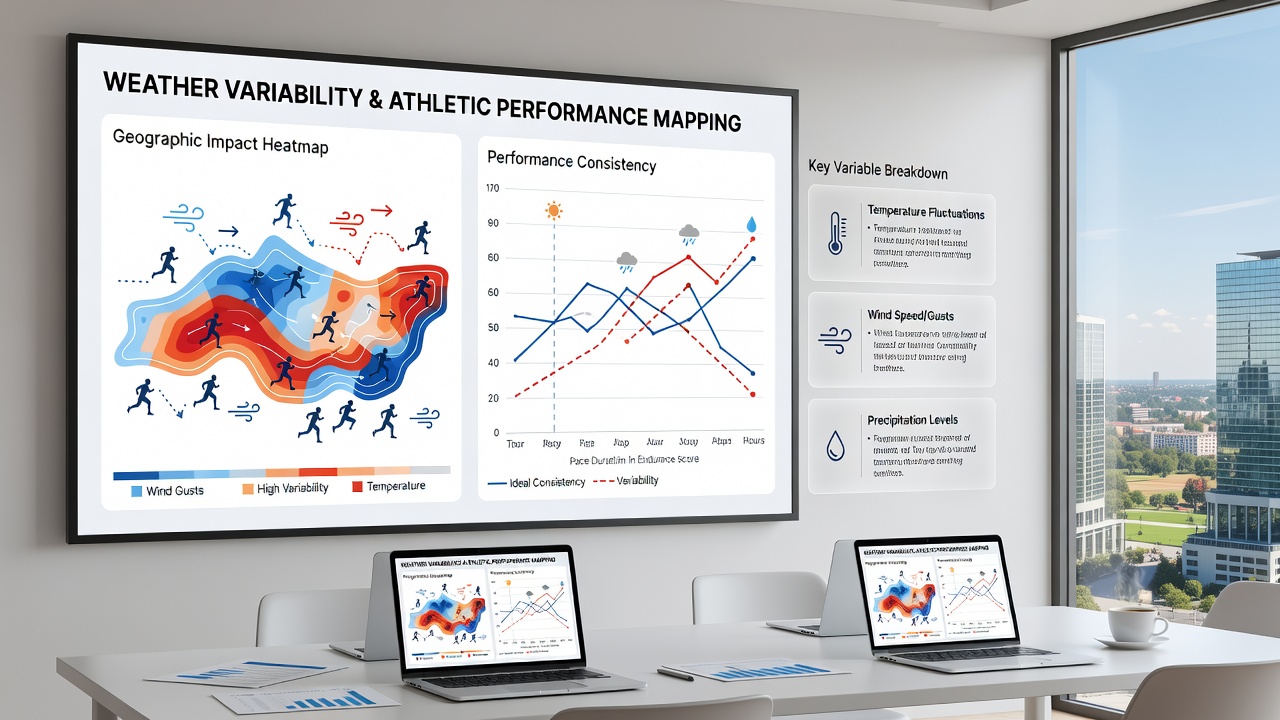
Analyses of historical event data demonstrate that wet conditions increase the likelihood of slips and altered ball behavior in racket sports while also raising equipment weight in throwing disciplines. Those patterns appear consistently across datasets from events held in temperate zones during shoulder seasons when frontal systems move through rapidly. Planners who map these variables against athlete profiles can identify clusters of events likely to produce tighter or wider performance spreads on given days.
Integrating Weather Models into Multi-Event Planning
Forecast integration relies on combining high-resolution meteorological outputs with historical performance baselines for specific venues and athlete cohorts. Government weather services in the United States and Australia supply gridded datasets that allow mapping of probable condition ranges for upcoming outdoor fixtures scheduled through late 2026. These resources enable identification of events where temperature or wind thresholds are projected to fall outside typical ranges for that location and time of year.
Performance consistency metrics derived from past competitions under similar conditions provide reference points because athletes who maintain tighter standard deviations in variable weather often demonstrate repeatable results across consecutive days. One study released by a Canadian sports research institute found that competitors with strong records in windy or humid settings showed lower variance in split times compared with peers whose best marks occurred only under stable conditions. Such distinctions become relevant when constructing sequences of selections across multiple outdoor disciplines on the same card or across a weekend slate.
Regional and Seasonal Considerations
Geographic differences matter because coastal venues experience more rapid humidity and wind shifts than inland sites while mountainous routes amplify temperature drops with elevation gain. European data collected over multiple seasons show that autumn events in northern latitudes encounter more frequent precipitation bands than equivalent fixtures in Mediterranean climates. October 2026 calendars include several high-profile races and tournaments where these regional signatures are expected to influence field spreads.
Event organizers publish course profiles and start-time windows that allow cross-referencing with forecast ensembles so that probable condition envelopes can be established days in advance. Those envelopes then feed into statistical models that estimate ranges of likely outcomes rather than single-point predictions. The resulting distributions support evaluation of how performance consistency may shift when multiple events are considered together.
Conclusion
Mapping weather variability against performance records supplies objective inputs for assessing consistency across outdoor athletic events. Temperature, wind, humidity, and precipitation each produce documented effects on physiological load and technical execution that appear repeatedly in competition datasets. When these factors are tracked through available meteorological and sports science resources, planners gain clearer pictures of probable outcome ranges for events scheduled in periods such as October 2026. The approach relies on verifiable measurements rather than speculation and connects directly to the task of evaluating multiple selections under changing environmental conditions.