Navigating Endurance Thresholds Across Disciplines to Refine Progressive Multi-Market Selections
Written by Parker Meier · Oct 15, 2026

Navigating Endurance Thresholds Across Disciplines to Refine Progressive Multi-Market Selections
Endurance thresholds mark the physiological points where sustained effort gives way to accumulating fatigue, and data from multiple sports shows these markers influence outcomes across running, cycling, swimming and combined events. Researchers track lactate thresholds and ventilatory markers to map how athletes maintain pace before performance declines, while studies in October 2026 continue to examine patterns in ongoing championship calendars and preparatory competitions. Those who analyze performance records observe that athletes who extend their threshold zones often produce more consistent results in longer formats, which in turn informs selections across several related markets at once.
Core Physiological Markers in Different Sports
Running events rely heavily on lactate threshold measurements taken during incremental tests, and figures from World Athletics competitions reveal how elite marathoners sustain efforts near 85 to 90 percent of maximum heart rate for extended periods. Cyclists in stage races encounter repeated threshold demands on climbs and time trials, where power output data collected over multiple days demonstrates cumulative fatigue effects. Swimmers face similar constraints in distance freestyle and medley events, although water resistance alters the rate at which thresholds are approached compared with land-based disciplines.
Combined events such as triathlons require athletes to manage transitions between thresholds in swimming, cycling and running segments, and longitudinal studies indicate that those who pace the initial swim conservatively preserve higher power reserves for later stages. Observers note that monitoring devices now capture real-time threshold estimates during competition, supplying granular datasets that reveal when an athlete begins to exceed sustainable limits.
Progressive Selection Frameworks Across Markets
Progressive multi-market selections build positions incrementally as new performance data emerges, and analysts incorporate endurance metrics to adjust exposure across related outcomes. Early indicators from training logs or heat performances allow refinement of selections before later stages begin, while updated readings from mid-competition checkpoints support further adjustments. This approach connects initial threshold estimates with evolving conditions such as weather shifts or course modifications that alter demand on athletes.
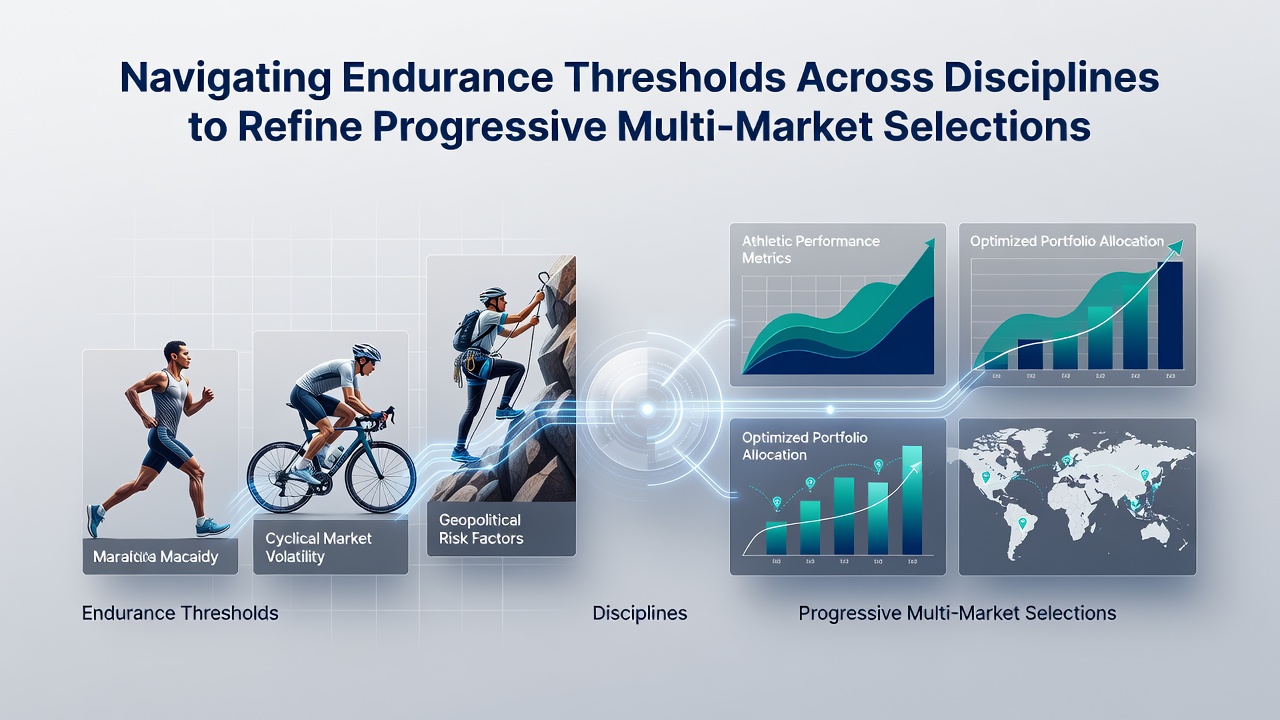
Records from recent international meets illustrate how athletes who maintain threshold proximity through the first half of an event frequently sustain output in the closing stages, creating measurable edges in markets tied to total time, stage rankings and head-to-head comparisons. Data compiled by the Australian Institute of Sport shows correlations between threshold stability and reduced variance in final results across endurance disciplines, which supports structured updates to multi-leg positions as events unfold.
Discipline-Specific Threshold Applications
In ultra-distance running, athletes often operate just below threshold for hours, and split-time analysis from October 2026 events highlights how early deviations predict later slowdowns. Cycling stage races introduce repeated threshold crossings on successive days, where recovery capacity between efforts becomes a decisive factor captured in power-duration curves. Rowing and cross-country skiing add environmental variables such as water current or snow conditions that modify the point at which thresholds are reached, yet the underlying physiological signals remain comparable.
Those who compile cross-discipline datasets find that athletes competing in mixed programs, such as modern pentathlon or adventure racing, display threshold profiles shaped by the cumulative load of varied efforts. These profiles allow progressive refinement of selections that span multiple event types or market categories within a single competition window.
Data Integration and Market Refinement
Integration of threshold data with external variables such as altitude, temperature and scheduling produces layered models used to update selections at successive decision points. Performance tracking platforms now aggregate readings from wearable sensors and official timing systems, enabling rapid recalculation of expected outcomes as conditions evolve. Research published through academic channels demonstrates that threshold-informed adjustments reduce dispersion in projected results compared with static pre-event estimates.
October 2026 schedules include several multi-day endurance festivals where progressive frameworks receive ongoing testing against live results, and preliminary reports indicate alignment between threshold stability metrics and market movements in related categories. Industry reports from sports science bodies further link these physiological markers with consistent patterns across regional and international calendars.
Conclusion
Endurance threshold navigation supplies measurable inputs for refining selections across progressive multi-market structures, and records from diverse disciplines continue to validate the approach through October 2026 and beyond. Continued collection of physiological and performance data supports incremental updates that align with observed athlete responses, while cross-sport comparisons highlight both shared principles and discipline-specific nuances in threshold management.